A date night plan
A cheese board and tasting night, with excellent non-wine options
Create a modest cheese tasting for two with contrasting textures, optional wine or alcohol-free pairings and a printable card for your favourite combinations.
Is this the plan for you?
Time to allow
Allow about 2 hours, including assembling the board and an unhurried tasting. Follow storage advice and put out small portions rather than leaving everything on the table all evening.
Budget notes
Set a medium total for a few cheeses, crackers and drinks. Buy small quantities where practical and choose accompaniments already in the cupboard before adding speciality extras.
These are planning suggestions, not live prices or bookings. The shorter and longer versions give you room to adapt the activity to your day.
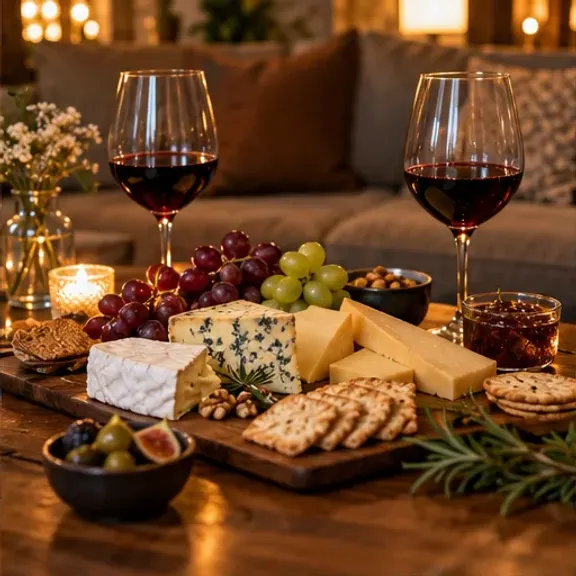
Illustrative artwork; not a photograph of a tested outing.
A cheese board is a good excuse to slow down and compare small, delicious things. Choose a few cheeses you both want to try, add simple accompaniments and make a comfortable space to sit. The conversation can be as informed or as gloriously untechnical as “this one tastes like a very good picnic”.
Wine is one possible pairing, while tea, sparkling water, juice or alcohol-free drinks can be just as much part of the tasting. Keep the portions and choices modest. You are making a pleasant evening for two, rather than trying to recreate the contents of an entire specialist shop.
Your supply checklist
Tick off what you have gathered, or print a fresh checklist. Ticks are for this page only.
☐
Three suitable cheeses or plant-based alternatives
☐
Crackers or bread and two simple accompaniments
☐
Chosen drinks, including water and alcohol-free options
☐
A board, separate serving utensils and plates
☐
A pencil and the pairing notes sheet
Make it happen
1. Choose a small but interesting line-up
Pick a few contrasting textures or flavours that suit both people’s dietary needs. Check labels and ask a retailer about ingredients if necessary, including milk, nuts or other relevant allergens. Consider any pregnancy or medical food advice that applies to you. Buy amounts you can enjoy sensibly and store, rather than adding a fourth cheese solely to fill a board.
2. Give each drink a proper welcome
Choose drinks you both genuinely want, making alcohol-free options ordinary choices rather than consolation prizes. If including wine, keep quantities modest and arrange travel so nobody needs to drive after drinking. There is no requirement to buy a bottle for every cheese. Water belongs on the table throughout, and trying the food alone is a complete tasting approach.
3. Build a board you can actually compare
Serve small portions with suitable separate utensils and keep the rest stored according to its instructions. Add bread or crackers and a couple of accompaniments, checking ingredients before combining them. Label the cheeses if you will forget their names. Leave room on the board so you can see what you are tasting instead of building an edible obstacle course.
4. Taste one combination at a time
Try a little cheese on its own first, then with a cracker or chosen accompaniment. Compare textures, flavours and the combinations each person enjoys. Taste a drink alongside it if wanted, taking your time and keeping alcohol optional. Describe things in your own words; nobody needs to discover a sophisticated aroma that mainly appears to be a cupboard.
5. Choose the pairing you would serve again
Each pick a favourite combination and explain the small detail that made it work. Put suitable remaining food away promptly and follow its storage and use-by instructions. Save your notes for another board or an ordinary lunch. Finish with a conversation about a meal you would enjoy sharing soon, rather than extending the tasting just to empty every packet.
Make it work for you
An alcohol-free tasting
Compare cheeses with two teas, juices or sparkling drinks you enjoy. You can still explore how combinations change without alcohol being part of the evening.
A plant-based board
Choose suitable labelled alternatives and check ingredients carefully. Build contrast through crackers, fruit, pickles or spreads that suit you, without promising they will taste like a particular dairy cheese.
A smaller tasting
Use two cheeses and one accompaniment, then turn the rest into a simple meal. A focused comparison can be more enjoyable than a table of things you feel obliged to finish.
Before you begin
Check allergens, use-by dates and storage instructions. Follow any relevant pregnancy or medical food guidance. Alcohol is optional, keep it modest and do not drive after drinking.
Food Standards Agency chilling guidance →The unpretentious pairing card
Use one line per cheese and keep your descriptions in words you would actually say.
1. Our cheeses and dietary checks:
2. Texture: creamy, crumbly, firm or something else?
3. Flavour in three ordinary words:
4. Best cracker, bread or accompaniment pairing:
5. Drink pairing, including alcohol-free choices:
6. A combination that surprised us:
7. The small board we would make again:
These prompts are included when you print the plan and checklist.
You have found your favourites. “Very good with that cracker” is a perfectly useful tasting note.
How did your date go?
Was a step unclear, or did you find a useful shortcut? Tell us the activity and what you would change.
Email feedback about this plan →Your email app opens so you can choose what to send. Please leave out private details, children’s names and photographs of other people.
Make choosing the date part of the date
Put a few possibilities you both like into a board and enjoy finding out which one wins. The sample game is an easy place to start.
A few more possibilities
Afternoon tea for two, with excellent sandwiches and a gentle pace →Breakfast in bed, with the delivery details already handled →A fancy restaurant date that feels special and still feels like you →Published by Daniel Jenkins · Guide text updated 28 October 2026
The activity lists were supplied and edited for Deal or Date. Guides and illustrative artwork use AI assistance. They are planning suggestions rather than accounts of personal trips or product tests. Venue prices, entry rules and accessibility need checking with the place you choose.
More dates. Brighter days.
No login. Just the two of you.
Deal or Date · Beta 0.1