A date night plan
Try a TikTok challenge and keep the outtakes for yourselves
Choose a safe, cheerful trend, learn a small routine together and film a private version without turning an hour of fun into a performance deadline.
Is this the plan for you?
Time to allow
About an hour for choosing, practising and recording. Give yourself a final ten-minute limit for filming so the date does not become a late-night editing shift.
Budget notes
Use a phone and simple things already at home. Skip any challenge requiring purchases, paid effects or equipment you do not otherwise need.
These are planning suggestions, not live prices or bookings. The shorter and longer versions give you room to adapt the activity to your day.
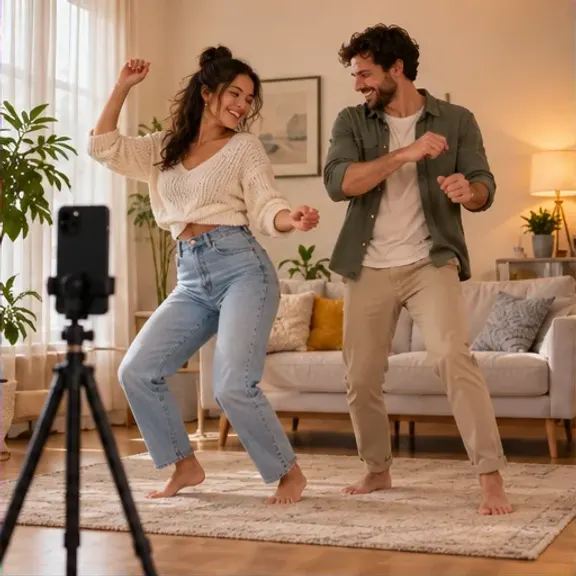
Illustrative artwork; not a photograph of a tested outing.
A short challenge can be a brilliant excuse to learn something silly together and discover how differently two people interpret “just one more take”. Choose a harmless dance, a timing game or a creative edit you both actually enjoy. You can make the clip solely for yourselves; an audience is an optional extra.
Keep the production ambitions within the hour. You do not need new clothes, complicated props or the original creator’s exact kitchen. A recognisable attempt with a wobble and a laugh often makes a better memory than forty increasingly tense versions of the same eight seconds.
Your supply checklist
Tick off what you have gathered, or print a fresh checklist. Ticks are for this page only.
☐
A phone with enough storage and charge
☐
One harmless challenge you both understand
☐
A stable phone stand or secure support
☐
A clear filming space with suitable lighting
☐
Any safe everyday prop needed for the chosen idea
Make it happen
1. Choose the challenge with a real shared yes
Watch a few examples together and choose a simple creative or coordination-based idea. Rule out stunts, risky eating, breath-holding, pranks, humiliation and anything involving unwilling people. Check that you both understand what happens from start to finish. If one person is merely tolerating the idea, switch to a different trend or a short scene you invent yourselves.
2. Agree the audience before recording
Decide whether the clip is private and ask what each person is happy to show. Check the background for addresses, documents, other people or things you do not want on camera. Make the phone stable without balancing it dangerously. Test a short shot and sound level, then mark a comfortable space where neither of you will bump furniture.
3. Practise a small piece at a time
Break the routine or timing sequence into two or three sections. Learn them slowly together, letting the person who has grasped a section explain without becoming an unexpectedly fierce choreographer. Adapt movements to your own comfort and balance. Practise off camera first if that helps you laugh at mistakes without thinking about how they will look.
4. Record a few takes and enjoy the wobble
Set a small number of attempts or a ten-minute filming window. Try the full sequence, check one clip together and change just the thing that would make it easier. Stop if anyone feels sore, embarrassed or fed up. You can keep an outtake alongside the finished attempt, provided both people are comfortable with the version you save.
5. Choose a memory rather than a deadline
Watch the clips and agree which, if any, to keep. Do a little editing only if it remains fun. Ask again before posting or sending a clip, even if sharing sounded fine at the start; someone can change their mind after seeing it. Delete unwanted takes and finish by giving your favourite accidental move an unnecessarily grand name.
Make it work for you
Camera shyness
Film only hands, props or shadows, or skip filming and simply learn the routine. The shared attempt still counts when nobody sees a finished clip.
Different movement needs
Use seated gestures, a hand-timing challenge or a creative transition between two outfits laid flat. Adapt the idea before practising rather than pushing through discomfort.
No social app wanted
Use the ordinary camera and create a ten-second scene with a beginning, a surprise and an ending. Keep the finished clip in a private album.
Before you begin
Choose a harmless idea and clear the space. Obtain consent from everyone included, respect privacy and agree separately before any upload. Views and likes need not become part of the date.
Our tiny production sheet
Fill this in before recording and keep it beside the phone.
1. The harmless idea we both chose:
2. Audience: private, or a specific sharing plan:
3. Background and personal details checked:
4. Our three practice sections:
5. Maximum takes or filming finish time:
6. Each person’s favourite clip and any veto:
7. Our official name for the best accidental move:
These prompts are included when you print the plan and checklist.
You have made something together. Its most important viewer may simply be future you having a giggle.
How did your date go?
Was a step unclear, or did you find a useful shortcut? Tell us the activity and what you would change.
Email feedback about this plan →Your email app opens so you can choose what to send. Please leave out private details, children’s names and photographs of other people.
Make choosing the date part of the date
Put a few possibilities you both like into a board and enjoy finding out which one wins. The sample game is an easy place to start.
A few more possibilities
A couples photo shoot without the awkward engagement-poster poses →Mini golf with tiny clubs and appropriately tiny rivalries →An at-home festival with two headliners and a very short walk to bed →Published by Daniel Jenkins · Guide text updated 28 October 2026
The activity lists were supplied and edited for Deal or Date. Guides and illustrative artwork use AI assistance. They are planning suggestions rather than accounts of personal trips or product tests. Venue prices, entry rules and accessibility need checking with the place you choose.
More dates. Brighter days.
No login. Just the two of you.
Deal or Date · Beta 0.1