A date night plan
A cooking class where the main ingredient is learning together
Choose a suitable hands-on class, check what is included and turn the lesson into a shared kitchen skill you can realistically try again at home.
Is this the plan for you?
Time to allow
Allow about 3 hours, checking the class’s actual duration and arrival time. Some sessions include eating, while others provide food to take away; confirm the format.
Budget notes
Set a medium class budget and check the full cost for two. Ask about ingredients, equipment, drinks, eating or takeaway containers and any extra charges before booking.
These are planning suggestions, not live prices or bookings. The shorter and longer versions give you room to adapt the activity to your day.
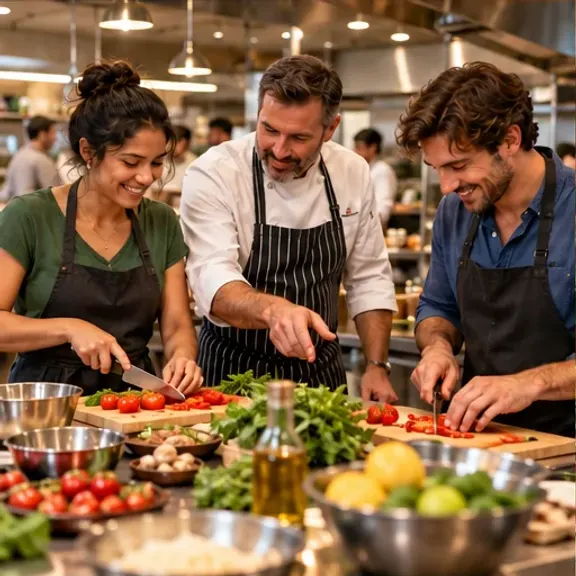
Illustrative artwork; not a photograph of a tested outing.
A cooking class gives you a change of scene, a teacher and something interesting to make together. Choose a cuisine or technique that appeals to both people rather than one person’s dream lesson reluctantly attended by the other. Being beginners together can be a lovely way to discover different strengths.
The instructor handles the technical teaching, so there is no need to arrive with a polished chopping style or an opinion about every ingredient. Listen, ask questions and enjoy the stage where the recipe still looks more like separate shopping than dinner. The useful souvenir may be one small technique you feel confident repeating.
Your supply checklist
Tick off what you have gathered, or print a fresh checklist. Ticks are for this page only.
☐
A confirmed class suitable for your experience
☐
Dietary and access needs agreed with the provider
☐
Clothing and footwear following class guidance
☐
Booking details and travel arrangements
☐
A small note for techniques and safe transport instructions
Make it happen
1. Choose what you would enjoy learning
Each suggest a cuisine, dish or small skill that sounds useful and fun. Look for a class with a clear beginner level if needed and confirm how much is hands-on. Ask whether you will work as a pair or in larger groups. A specific lesson you both welcome is more promising than a complicated menu chosen mainly because it looks impressive.
2. Check the practical fit before paying
Contact the provider about allergies, dietary needs, access and anything that may affect participation. Confirm what can genuinely be accommodated rather than assuming ingredients can be swapped on arrival. Read cancellation terms, check what is included and plan travel. Ask whether the session involves alcohol or food you would prefer to avoid, and choose another class if the format does not suit.
3. Arrive ready for the instructor’s way
Follow guidance on clothing, hair, jewellery and arrival time. Listen to food hygiene and equipment instructions, even if you already cook regularly. Ask questions before using unfamiliar tools. Share the workstation considerately and agree who starts each task, so one person does not automatically become the cook while the other spends the whole lesson holding an empty bowl.
4. Swap useful jobs and notice one technique
Take turns with suitable tasks under the instructor’s guidance. Offer help without taking over and celebrate a small success in each other’s work. Choose one practical detail to remember, such as how the instructor organises preparation or checks a cooking stage. Ask permission before photographs and keep the lesson’s pace, rather than pausing every step to document a recipe you can obtain properly.
5. Give the lesson a realistic sequel
Enjoy the food in the format provided and follow instructions for any takeaway portions. Ask about storage, transport and reheating where relevant. Write down one technique and a version of the dish you could make with your own kitchen equipment. Choose a future evening only if you fancy it; the class is already a complete date without becoming a new domestic qualification.
Make it work for you
Different cooking experience
Choose a new cuisine or technique for both of you and share jobs deliberately. The more experienced person can learn from the instructor without becoming an unsolicited second tutor.
A gentler class format
Ask about seated preparation, shorter sessions or demonstrations if hands-on work is unsuitable. Confirm the specific setup and opportunities to pause before booking.
A lesson at home
Choose a reliable written or video recipe and one new technique. Keep the recipe modest, share preparation and follow food hygiene guidance as carefully as in a teaching kitchen.
Before you begin
Confirm food requirements in advance and follow the instructor’s hygiene and equipment guidance. Ask for safe transport, storage and reheating instructions before taking any food home.
The two-cook class notebook
Fill in the booking details first and bring the rest as a memory aid.
1. Cuisine or skill we both want to learn:
2. Hands-on format, duration and full cost:
3. Dietary, access and clothing details confirmed:
4. A task each of us wants to try:
5. One technique explained in our own words:
6. Storage and transport instructions for finished food:
7. The small version we could make in our own kitchen:
These prompts are included when you print the plan and checklist.
You have learned something together, and dinner may be an especially useful side effect.
How did your date go?
Was a step unclear, or did you find a useful shortcut? Tell us the activity and what you would change.
Email feedback about this plan →Your email app opens so you can choose what to send. Please leave out private details, children’s names and photographs of other people.
Make choosing the date part of the date
Put a few possibilities you both like into a board and enjoy finding out which one wins. The sample game is an easy place to start.
A few more possibilities
A cocktail-making night with a very welcome mocktail menu →A sushi night built around a delicious shared shortlist →Bake and decorate a cake with room for a wonky masterpiece →Published by Daniel Jenkins · Guide text updated 28 October 2026
The activity lists were supplied and edited for Deal or Date. Guides and illustrative artwork use AI assistance. They are planning suggestions rather than accounts of personal trips or product tests. Venue prices, entry rules and accessibility need checking with the place you choose.
More dates. Brighter days.
No login. Just the two of you.
Deal or Date · Beta 0.1