A date night plan
An escape room for two excellent, occasionally baffled detectives
Choose a two-player-friendly room, agree a calm teamwork style and enjoy the puzzles with a useful pre-booking checklist and a thoughtful debrief.
Is this the plan for you?
Time to allow
Allow about 90 minutes for a typical briefing, room and debrief, plus travel. Confirm the operator’s actual session length and requested arrival time before booking.
Budget notes
Set a medium outing budget and check the full price for two players. Some venues price by group size or require a minimum spend; compare the actual total, including travel.
These are planning suggestions, not live prices or bookings. The shorter and longer versions give you room to adapt the activity to your day.
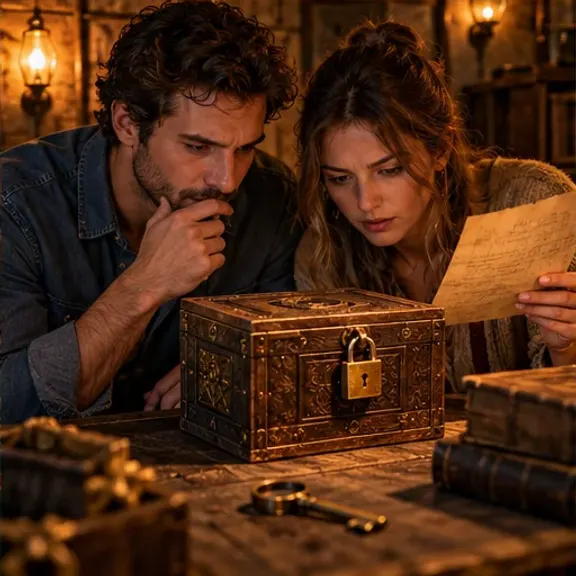
Illustrative artwork; not a photograph of a tested outing.
An escape room gives you a shared job, an interesting setting and the chance to announce that you have found a clue when it turns out to be a perfectly ordinary chair. The fun comes from combining ideas and noticing different things. You can enjoy the session whether or not the final puzzle is solved.
Pick a theme that both people welcome and a venue comfortable with a pair. Difficulty, scares and physical access vary, so checking first makes a real difference. The date should feel like a playful puzzle together, rather than an unexpected test of how well you cope under theatrical pressure.
Your supply checklist
Tick off what you have gathered, or print a fresh checklist. Ticks are for this page only.
☐
A suitable two-player room booking
☐
Confirmed theme, difficulty and access information
☐
Booking details and a travel plan
☐
Comfortable clothes meeting the venue’s guidance
☐
The teamwork prompts below for your pre-game chat
Make it happen
1. Book a mystery you both want to enter
Read the operator’s current description and check whether the room is designed for two players. Ask about scares, darkness, confined areas, movement requirements, sensory effects and any specific access needs. Check cancellation terms and pricing. A beginner-friendly theme you both like will usually offer a better date than the hardest room chosen to prove a point.
2. Agree how your detective partnership works
Before arrival, choose a few simple habits: say discoveries aloud, share objects and ask for help without embarrassment. Decide that hints are part of enjoying the experience rather than a failure. Let either person ask for a pause or exit. If one of you loves puzzles, make room for the other to finish ideas instead of immediately taking over.
3. Listen carefully to the real-world briefing
Arrive when requested and pay attention to the operator’s rules, exit arrangements and instructions about what can be touched. Ask any remaining comfort questions before starting. Follow guidance on belongings and recording. Knowing how to leave or contact staff makes it easier to relax into the fictional problem, and avoids treating ordinary fittings as enthusiastically dismantlable props.
4. Share information rather than competing for answers
Describe what you find and place permitted clues where you can both see them. Listen to each other’s theory before trying it, and follow the room’s instructions without forcing locks or moving restricted objects. If you are stuck, use the hint system you were shown. Keep the tone kind when an idea fails; most good puzzle sessions include several convincing wrong turns.
5. Enjoy the explanation and your own highlights
When the session ends, listen to any debrief the operator offers and ask about a puzzle you were curious about. Choose one thing each person contributed well and one moment that made you laugh. Keep puzzle solutions private so future visitors can enjoy discovering them. Decide whether another room appeals, based on your actual comfort and enjoyment rather than the result alone.
Make it work for you
A gentler mystery
Choose a non-horror beginner session and ask about lighting, exits and any startling effects. A room labelled easy can still have unsuitable features, so check the details.
Different puzzle confidence
Alternate who leads a section and speak discoveries aloud. The experienced player can ask inviting questions rather than supplying the answer before the other person has time to explore.
A puzzle at home
Use a puzzle book or game you already own and work together without a timer. Keep the same habits of sharing clues, taking turns and welcoming hints.
Before you begin
Follow staff instructions and know the exit arrangements. Confirm access and sensory needs before booking, never force props or locks and leave or pause if either person feels uncomfortable.
The two-detective briefing card
Use this before booking and revisit the final lines after the session.
1. Theme, player suitability and full price:
2. Scares, lighting, movement and access checked:
3. Arrival time and how we can pause or leave:
4. Our agreement about hints:
5. One teamwork habit we want to remember:
6. A contribution I appreciated from you:
7. Our favourite moment, without revealing a puzzle solution:
These prompts are included when you print the plan and checklist.
Escaping is a possible ending. Discovering that you make a good puzzle team is another.
How did your date go?
Was a step unclear, or did you find a useful shortcut? Tell us the activity and what you would change.
Email feedback about this plan →Your email app opens so you can choose what to send. Please leave out private details, children’s names and photographs of other people.
Make choosing the date part of the date
Put a few possibilities you both like into a board and enjoy finding out which one wins. The sample game is an easy place to start.
A few more possibilities
Indoor skydiving: a date with wind, goggles and encouraging thumbs-up →Axe throwing for two, with an instructor and very gentle scorekeeping →An arcade date with a pocket-sized budget and big cheering →Published by Daniel Jenkins · Guide text updated 28 October 2026
The activity lists were supplied and edited for Deal or Date. Guides and illustrative artwork use AI assistance. They are planning suggestions rather than accounts of personal trips or product tests. Venue prices, entry rules and accessibility need checking with the place you choose.
More dates. Brighter days.
No login. Just the two of you.
Deal or Date · Beta 0.1