A date night plan
A farmers’ market stroll with a small bag of good discoveries
Browse a local market together, ask thoughtful questions and choose a few treats within a shared budget instead of shopping for an imaginary banquet.
Is this the plan for you?
Time to allow
Allow about 90 minutes for browsing and a pause. Check the actual market date, hours and location, since some run only on particular days or change with the season.
Budget notes
Agree a small total for treats before arriving. Browsing is enjoyable on its own; plan travel and any cash requirements separately and avoid buying food you cannot store or use.
These are planning suggestions, not live prices or bookings. The shorter and longer versions give you room to adapt the activity to your day.
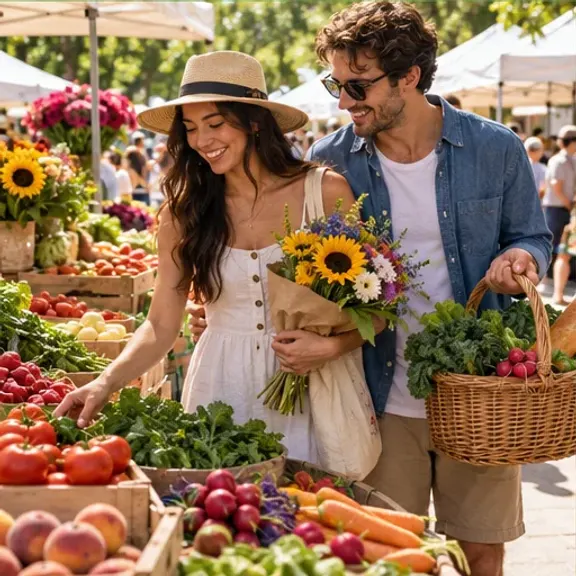
Illustrative artwork; not a photograph of a tested outing.
A market date gives you plenty to notice and an easy reason to wander side by side. Look at the stalls, find out what is available and choose something you would enjoy trying together. You do not need a vast hamper or specialist knowledge about cheese to have a good time.
Let the market shape the date rather than arriving with a rigid shopping mission. One lovely loaf, a seasonal ingredient or an interesting handmade item can be enough. The fun is in comparing what catches your eye and hearing the stories stallholders are happy to share.
Your supply checklist
Tick off what you have gathered, or print a fresh checklist. Ticks are for this page only.
☐
A checked market listing and travel route
☐
A reusable shopping bag
☐
An agreed spending pot and suitable payment
☐
An insulated bag with ice packs if buying chilled food
☐
A short note of dietary needs and useful food at home
Make it happen
1. Check the day and choose a simple aim
Confirm the organiser’s current information rather than relying on an old listing. Check access, facilities, weather and transport. Agree whether you are mainly browsing, finding a picnic addition or choosing an ingredient for dinner. A small shared aim gives the stroll shape without requiring the market to stock a particular item you have imagined.
2. Take one look before filling the bag
Do a gentle first circuit and notice which stalls interest each of you. Read prices and make a small mental shortlist before purchasing. Leave room for other shoppers and ask before handling goods. You might each nominate one promising item, then compare choices away from the stall rather than blocking the front while conducting a full budget meeting.
3. Ask a question that helps you enjoy the find
Choose a stall where the seller has time to talk and ask something practical: how to serve an ingredient, what is in a product or how long it keeps. Check allergens and cross-contact information where relevant. Accept samples only if offered and suitable for you. Curiosity is welcome; a free tasting tour is not something stallholders owe visitors.
4. Make one or two deliberate choices
Look at the remaining pot and buy the things you actually want to use. If something needs chilling, buy it near the end and pack it appropriately. Choose separate items if your tastes or dietary needs differ. You can treat each other to a small choice within the shared limit, without making an unwanted surprise purchase part of the date.
5. Give your finds their own little moment
Find a suitable place for a drink or head home to unpack. Store food according to the seller’s instructions and decide when you will enjoy it together. Write down a producer or item you might return for. Finish by sharing the most interesting thing you noticed, including a discovery you admired without buying. A lighter bag can still hold a successful outing.
Make it work for you
A browsing-only visit
Set a no-purchase plan and choose imaginary favourites: a dinner ingredient, a gift and the stall you would revisit. Tell each other why each one caught your attention.
Crowds make browsing difficult
Ask the organiser about quieter periods and access, choose a shorter circuit and identify a suitable place to pause. Keep the trip flexible if the actual layout feels tiring.
A tiny cooking sequel
Buy one suitable ingredient and use it in a familiar meal later. Ask for a simple serving idea rather than committing to an ambitious recipe requiring another shopping trip.
Before you begin
Check ingredients, use-by dates and storage instructions with sellers. Keep chilled purchases in suitable storage and respect sample, handling and photography rules at each stall.
Food Standards Agency chilling guidance →The small market discovery list
Give each line one answer; buying every discovery is optional.
1. Today’s treat limit and what it includes:
2. An ingredient we would like to cook with:
3. One useful question for a stallholder:
4. A product’s ingredients and storage instructions:
5. A handmade item we admired:
6. The thing we chose and when we will enjoy it:
7. A stall worth remembering for next time:
These prompts are included when you print the plan and checklist.
You came home with a little something and a better story than “we went shopping”.
How did your date go?
Was a step unclear, or did you find a useful shortcut? Tell us the activity and what you would change.
Email feedback about this plan →Your email app opens so you can choose what to send. Please leave out private details, children’s names and photographs of other people.
Make choosing the date part of the date
Put a few possibilities you both like into a board and enjoy finding out which one wins. The sample game is an easy place to start.
A few more possibilities
A bike-ride picnic with a route both riders will enjoy →Cloud watching: forty-five minutes with nowhere to be →Fish and chips by the sea, with a seat worth finding first →Published by Daniel Jenkins · Guide text updated 28 October 2026
The activity lists were supplied and edited for Deal or Date. Guides and illustrative artwork use AI assistance. They are planning suggestions rather than accounts of personal trips or product tests. Venue prices, entry rules and accessibility need checking with the place you choose.
More dates. Brighter days.
No login. Just the two of you.
Deal or Date · Beta 0.1