A date night plan
A memory-lane scrapbook, starting with just one good page
Make a shared scrapbook without getting buried in supplies: choose a theme, sort keepsakes, write useful captions and leave room for your next memory.
Is this the plan for you?
Time to allow
The catalogue allows a whole afternoon. Start with one page in 45–60 minutes, or spread a larger book over several dates.
Budget notes
A notebook, loose paper or a folder you own can work. Decide whether you need printed photos or extra materials before shopping; a new album is optional.
These are planning suggestions, not live prices or bookings. The shorter and longer versions give you room to adapt the activity to your day.
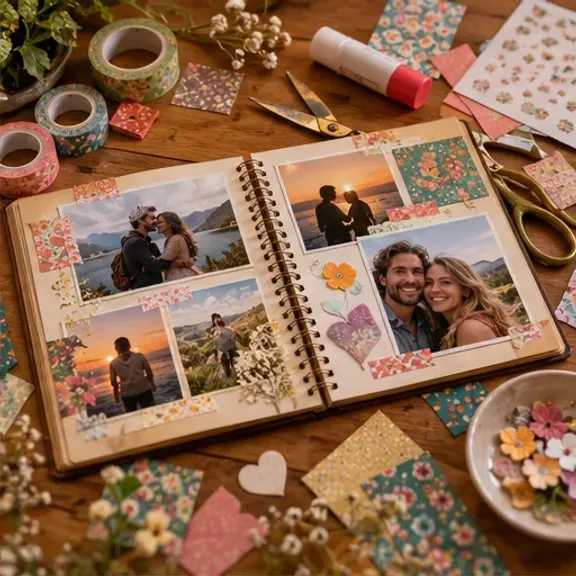
Illustrative artwork; not a photograph of a tested outing.
A scrapbook can be a lovely record of your time together, but it does not need a trolley of craft supplies or a complete photographic history. Start with one page about one memory. An ordinary day with a good story is just as welcome as a big anniversary.
The date is the time spent remembering and making something together. The finished book is a bonus. You are allowed to have a page with slightly crooked photographs; it is a scrapbook, not an application to join the National Archives.
Your supply checklist
Tick off what you have gathered, or print a fresh checklist. Ticks are for this page only.
☐
A notebook, album, folder or a few sheets of paper
☐
A small selection of photos or keepsakes you both approve
☐
Pens and suitable glue or removable photo corners
☐
Scissors appropriate to the materials
☐
A flat space and somewhere to keep the finished page
Make it happen
1. Pick one memory to begin with
Choose a trip, a meal, a tiny shared achievement or the day something went hilariously wrong. Agree a theme narrow enough to finish a page. “Every holiday we have ever taken” can wait until you have a very large table and an unusually free week.
2. Gather a small handful of items
Choose a few photographs, a ticket, a note or a drawing. Keep anything private out of the pile unless both people want it included. You can draw a remembered object when the original is long gone. Avoid putting irreplaceable items into glue before you have agreed how you want to preserve them.
3. Tell the stories before arranging the page
Take turns explaining what you remember about each item. You may remember different details; write both versions rather than appointing an official historian. Make a note of the small things a photograph cannot show: the conversation, the weather or the fact that you took the wrong bus first.
4. Arrange, caption, then stick
Place the items without attaching them, leaving space for a heading and a few sentences. Move things around until you both like the page. Add captions before or after sticking, whichever is easier with your materials. Share the jobs so one person is not reduced to holding the glue lid for forty minutes.
5. Leave a little room for what comes next
Read the finished page together and add a date if you know it. Leave uncertainty honest: “summer, probably the rainy one” is better than an invented detail. Add an empty page or an envelope for your next memory, then put the supplies away and decide where the book will live.
Make it work for you
No printer or old photographs
Use drawings, written memories and things you already have. A map of a favourite walk or a list of phrases you both use can make a very personal page.
A digital version
Make one shared page in a tool you already know. Check sharing permissions before adding private photos, and agree who can see the finished result.
A shorter attention span for crafts
Set a finish time and make a postcard-sized page. Put the rest of the items into a labelled envelope for another day rather than turning the date into an unfinished project mountain.
Before you begin
Ask before including or sharing personal photos, messages or information about other people. Follow adhesive instructions and consider copies or removable mounts for valuable keepsakes.
Captions that remember more than the camera
Choose a few of these starters for the page. You do not have to answer them all.
1. This happened when…
2. The photo does not show…
3. Your version of the story is…
4. My favourite small detail was…
5. We still laugh about…
6. Something I would love to do with you next is…
These prompts are included when you print the plan and checklist.
One finished, slightly wonky page beats a very expensive empty album.
How did your date go?
Was a step unclear, or did you find a useful shortcut? Tell us the activity and what you would change.
Email feedback about this plan →Your email app opens so you can choose what to send. Please leave out private details, children’s names and photographs of other people.
Make choosing the date part of the date
Put a few possibilities you both like into a board and enjoy finding out which one wins. The sample game is an easy place to start.
A few more possibilities
Decorate each other a mug: tiny artwork for the tea cupboard →A future vision board, with room for dreams and a realistic Tuesday →A couples photo shoot without the awkward engagement-poster poses →Published by Daniel Jenkins · Guide text updated 28 October 2026
The activity lists were supplied and edited for Deal or Date. Guides and illustrative artwork use AI assistance. They are planning suggestions rather than accounts of personal trips or product tests. Venue prices, entry rules and accessibility need checking with the place you choose.
More dates. Brighter days.
No login. Just the two of you.
Deal or Date · Beta 0.1