A date night plan
A memory-lane treasure hunt with clues written in your own story
Create a personal hunt using meaningful places, photographs and objects, with gentle clue templates, a practical route and a final stop that welcomes both versions of the memories.
Is this the plan for you?
Time to allow
Allow up to 5 hours for a leisurely hunt with travel, breaks and a final stop. Clue writing and route checking happen beforehand; shorten the route if the real travel time is too much.
Budget notes
Keep a small budget using existing photographs and objects, with modest travel or a final snack. Check costs before adding paid venues, and avoid buying a prize to make the ending feel worthwhile.
These are planning suggestions, not live prices or bookings. The shorter and longer versions give you room to adapt the activity to your day.
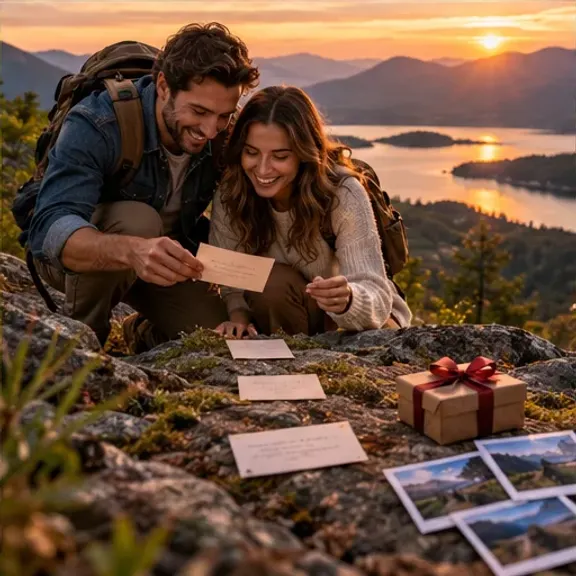
Illustrative artwork; not a photograph of a tested outing.
A memory hunt turns a few shared moments into a playful journey. Choose memories you both enjoy and use them as clues to places, photographs or objects. The best answers will feel recognisable and affectionate, rather than requiring someone to recall the exact date you bought an especially important sandwich.
Make it an invitation to remember together, not a test of devotion. You can give hints freely, change a clue that misses its mark and enjoy different recollections. A final cup of tea beside a favourite photograph can feel just as meaningful as returning to a distant landmark.
Your supply checklist
Tick off what you have gathered, or print a fresh checklist. Ticks are for this page only.
☐
Four to six personal clues on paper or private messages
☐
Existing photos or meaningful objects used with care
☐
A checked route with suitable access and opening times
☐
Water, layers and travel arrangements
☐
A comfortable final stop and spare hints
Make it happen
1. Choose memories with a welcoming feeling
List a few moments your partner would be happy revisiting: a shared laugh, a favourite outing, a small celebration or a place you often return to. Avoid sensitive chapters unless you both want them included. Choose four to six with an obvious visual or location link. Keep originals safe by using copies of valuable photographs and treasured notes.
2. Build the route before writing clever clues
Check that each public location is open, suitable and accessible on your date, with permission for any private space. Keep stops close enough to enjoy and add a comfortable break. Do not leave objects unattended in public; carry clues and reveal them at each stop. If a place is unavailable, use a photograph at home rather than trying to recreate access.
3. Write clues a loved person can solve
Use one clear memory detail and one practical direction per clue. Add a separate hint and a direct answer you can give without fuss. Test whether the clue relies on information your partner actually has, rather than something you privately remember. Include enough route information to choose suitable clothing and plan the day, even if the next exact stop stays secret.
4. Let each answer open a story
Give the first clue and explain that hints and passes are welcome. At each stop, ask what they remember before sharing your own version. Hand over the next clue only when you are ready to move on, keeping an eye on comfort, weather and time. A mistaken answer can become a funny detour in conversation without changing the physical route.
5. End somewhere you can sit and remember
Use the final clue to reach a comfortable seat, a familiar snack or a small collection of photographs. Thank each other for a detail you enjoyed hearing again. Keep the clue cards together if wanted and collect every material you brought. Finish with one gentle future invitation, such as a new place to make a memory, without requiring an immediate grand plan.
Make it work for you
An entirely home-based hunt
Use rooms, books, photographs and everyday objects as stops. Keep clues in your hands or agreed safe places and finish at a set table with a favourite drink.
Memories differ
Use clues that can be solved from visible pictures or objects, then compare the stories. Someone remembering a moment differently does not need to lose the game.
A newer relationship
Include a first conversation, a shared song and favourite ordinary details. Three thoughtful stops can be enough without inventing a long history you do not yet have.
Before you begin
Use permitted, accessible locations and carry clues rather than leaving items in public. Respect privacy, keep treasured originals safe and avoid using memory as a test of affection.
Six clue frames for your own memories
Replace the brackets with real details, add a practical direction and keep a plain answer ready.
1. Where did we first [shared activity]? Our next stop is the accessible public area by [clear landmark].
2. Find the photo with [visible detail]. What happened just before it?
3. Which everyday object reminds us of [kind, funny habit]? Look at [agreed place].
4. This song was playing when [shared moment]. What would you call that day?
5. Choose the picture that best matches [welcoming memory]. Tell me your version.
6. Our last clue leads to [comfortable seat or snack], where I want to say thank you for [specific thing].
These prompts are included when you print the plan and checklist.
The treasure is partly where the clues lead and partly the stories you tell on the way.
How did your date go?
Was a step unclear, or did you find a useful shortcut? Tell us the activity and what you would change.
Email feedback about this plan →Your email app opens so you can choose what to send. Please leave out private details, children’s names and photographs of other people.
Make choosing the date part of the date
Put a few possibilities you both like into a board and enjoy finding out which one wins. The sample game is an easy place to start.
A few more possibilities
The £5 surprise challenge: small budget, highly specific thoughtfulness →A day of their favourite things, with enough gaps to enjoy them →A couples photo shoot without the awkward engagement-poster poses →Published by Daniel Jenkins · Guide text updated 28 October 2026
The activity lists were supplied and edited for Deal or Date. Guides and illustrative artwork use AI assistance. They are planning suggestions rather than accounts of personal trips or product tests. Venue prices, entry rules and accessibility need checking with the place you choose.
More dates. Brighter days.
No login. Just the two of you.
Deal or Date · Beta 0.1