A date night plan
A new walking trail with a sensible route and room to wander mentally
Choose an unfamiliar but suitable trail, plan the route and return carefully, and use simple noticing prompts to enjoy discovering somewhere together.
Is this the plan for you?
Time to allow
Allow about 3 hours, including pauses, and add travel separately. Choose a published route whose distance, ascent, terrain and daylight requirements comfortably fit both people.
Budget notes
The walk can involve no new spending with food and water from home. Check transport, parking, permits or access costs rather than assuming every trail is free to reach.
These are planning suggestions, not live prices or bookings. The shorter and longer versions give you room to adapt the activity to your day.
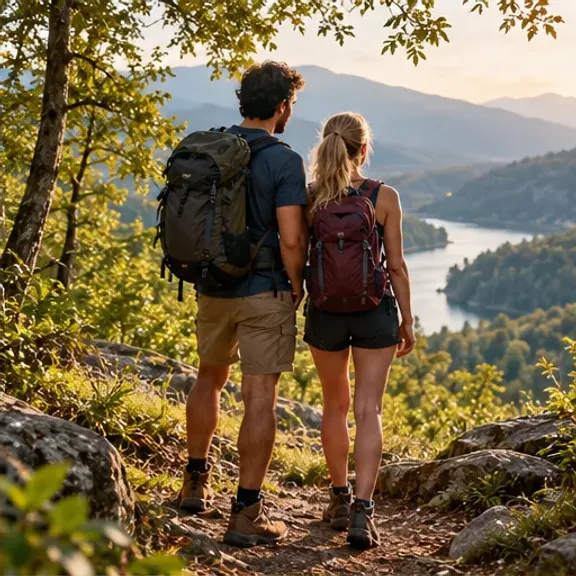
Illustrative artwork; not a photograph of a tested outing.
A new trail makes an ordinary walk feel like a little joint discovery. You do not need a remote mountain or a heroic distance. A waymarked path, a woodland loop or a local route neither of you has tried can offer plenty of fresh scenery and conversation.
Plan for the people walking today, including their energy, mobility and experience. Let the route be interesting enough to enjoy without asking more than you want to give. Arriving home pleasantly tired is optional; feeling you had room to look around and talk is the more useful ambition.
Your supply checklist
Tick off what you have gathered, or print a fresh checklist. Ticks are for this page only.
☐
A reliable route map and navigation you know how to use
☐
Suitable footwear and weather-appropriate layers
☐
Enough drinking water and suitable snacks
☐
A charged phone and practical emergency kit for the route
☐
Any access information, facilities and return travel details
Make it happen
1. Choose a new route within familiar abilities
Read a reliable current route description, checking surfaces, hills, steps, access and any closures. Choose a trail suitable for the less confident walker and the day’s conditions. Avoid making this your first attempt at difficult navigation or exposed terrain. Check the forecast, daylight and return transport before deciding that the distance on a map looks pleasantly small.
2. Make a plan that allows a change of mind
Mark the start, turns, useful facilities and a sensible shorter option. Carry the map in a form that still works without mobile signal and know how to use it. Tell a trusted person your plan and expected return where appropriate, especially away from busy areas. Pack for waiting or slowing down as well as moving, since weather and energy can change.
3. Begin slowly enough to notice the place
Check you are at the correct start and follow signs and your route together. Let one person navigate a section while the other checks the next obvious landmark, swapping if wanted. Walk at a pace where conversation remains comfortable. Notice a colour, sound or small feature you might miss on a familiar path, without leaving the permitted route to investigate.
4. Pause before you need a rescue from the snack bag
Use a suitable stopping point for water, food and a comfort check. Compare what you have each noticed and look at your progress against the planned time. Shorten or turn back early if conditions, daylight or energy are no longer right. A planned alternative is part of the date, rather than a disappointing footnote to the longer route.
5. Finish with a trail note you can actually use
Return by the suitable route and check in with anyone expecting to hear from you. Take litter home and leave gates as directed by local guidance. Record the real walking time, a useful access detail and your favourite stopping point. Decide whether you would repeat the trail in another season or choose a different route next time.
Make it work for you
A step-free discovery
Choose a route with specific, current surface and access information, confirming details with the land manager if needed. A short accessible loop can still feel new and absorbing.
Different walking stamina
Plan to the slower person’s comfortable pace and choose frequent stopping places. Share route choices, and avoid adding unplanned distance because one person still feels energetic.
Poor conditions
Pick a safer short local route only if suitable, or use the time indoors to plan a future trail. Postponing can be the most thoughtful navigation decision of the day.
Before you begin
Check route, weather, daylight and access. Carry suitable kit and navigation, stay within your abilities and change the plan early if needed. Follow local countryside guidance and keep away from unsafe edges and water.
Ramblers guidance for new walkers →Our new-trail pocket card
Complete the route details before leaving and the final line when you return.
1. Route, distance, terrain and likely walking time:
2. Weather, daylight and closures checked:
3. Start, return transport and expected finish:
4. Map, water, layers and emergency kit packed:
5. Shorter option and our turnaround decision point:
6. Someone who knows our plan, if appropriate:
7. Favourite stop and one practical note for another visit:
These prompts are included when you print the plan and checklist.
Somewhere new does not have to be far away to give the two of you a different view.
How did your date go?
Was a step unclear, or did you find a useful shortcut? Tell us the activity and what you would change.
Email feedback about this plan →Your email app opens so you can choose what to send. Please leave out private details, children’s names and photographs of other people.
Make choosing the date part of the date
Put a few possibilities you both like into a board and enjoy finding out which one wins. The sample game is an easy place to start.
A few more possibilities
A bike-ride picnic with a route both riders will enjoy →Cloud watching: forty-five minutes with nowhere to be →A one-day city break with an anchor plan and space between things →Published by Daniel Jenkins · Guide text updated 28 October 2026
The activity lists were supplied and edited for Deal or Date. Guides and illustrative artwork use AI assistance. They are planning suggestions rather than accounts of personal trips or product tests. Venue prices, entry rules and accessibility need checking with the place you choose.
More dates. Brighter days.
No login. Just the two of you.
Deal or Date · Beta 0.1