A date night plan
A stargazing picnic with warm toes and no astronomy exam
Plan a comfortable evening under the sky with a familiar location, simple picnic food and a printable night-out checklist for a gentle shared pause.
Is this the plan for you?
Time to allow
Allow about 3 hours including travel, setup and a relaxed picnic. Check sunset, suitable viewing conditions and site closing times, then set a clear leaving time.
Budget notes
Keep a small picnic budget using familiar food and blankets from home. Include transport or parking costs and skip buying astronomy equipment for a first evening.
These are planning suggestions, not live prices or bookings. The shorter and longer versions give you room to adapt the activity to your day.
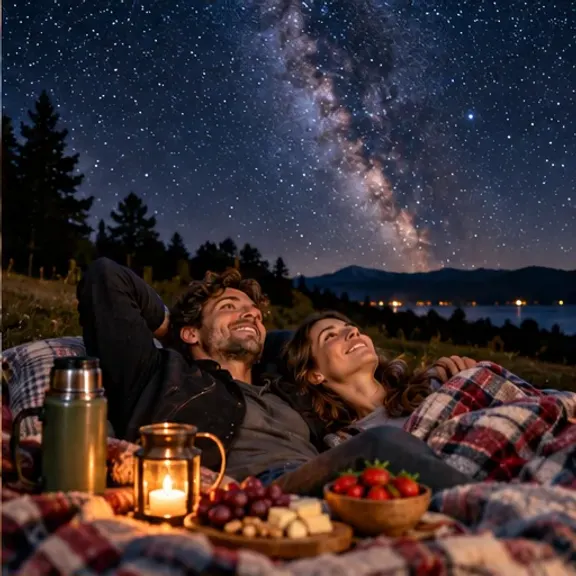
Illustrative artwork; not a photograph of a tested outing.
A stargazing picnic is an invitation to sit still somewhere suitable and look up together. You do not need to name every constellation or own a telescope. A clear patch of sky, warm layers and a little food can be enough to make an ordinary evening feel wider and quieter.
Choose comfort and safe access before chasing darkness. A familiar garden or an easily reached permitted space may be a better choice than a remote viewpoint. Some evenings will give you stars, others moonlight or clouds. You can enjoy the date without the sky promising a particular performance.
Your supply checklist
Tick off what you have gathered, or print a fresh checklist. Ticks are for this page only.
☐
A permitted location and reliable route home
☐
Warm layers, blankets and supportive seating
☐
A charged phone and suitable torch for moving around
☐
Water and safely packed simple picnic food
☐
An optional current sky guide and your evening checklist
Make it happen
1. Choose a night and a place that suit sitting still
Check the forecast and choose a permitted location you can reach and leave safely in low light. Confirm access, closing times, terrain and facilities. Avoid unsafe edges, water and unfamiliar remote paths. If conditions are poor, use a garden or indoor alternative. A slightly brighter but comfortable setting can offer a much better evening than a difficult journey to darker skies.
2. Pack warmth before packing ambition
Choose layers and seating for being still rather than walking briskly. Bring a suitable torch for the route and check the phone is charged. Pack a modest picnic with water, keeping anything that needs chilling in appropriate insulated storage. Pick foods easy to identify and eat in low light, and avoid cooking or open flames as part of the setup.
3. Arrive while you can see the practical details
Reach the spot with time to check the ground, exits and surroundings before it becomes dark. Set up without blocking paths and agree where belongings, lights and keys will stay. Eat any food that is best enjoyed before full darkness. Keep lighting considerate of other visitors, but use the light you need whenever moving around safely.
4. Let looking up be enough
Settle comfortably and notice the sky without requiring a particular sighting. If using a current sky guide, look for one thing it identifies for your place and date, then put the screen away. Share a quiet memory or an imaginary journey inspired by the sky. You can simply sit together; this date does not need a running commentary from either person.
5. Leave before cold becomes the main event
Check comfort and time regularly, packing up early if needed. Use your torch to look for every container, scrap and personal item before leaving. Follow the planned route home and let anyone expecting an update know you are back. Save one observation or line from the conversation, rather than judging the whole evening on how many stars appeared.
Make it work for you
A garden sky picnic
Use a suitable garden or outdoor area with permission and familiar access. Keep the same blankets, snacks and pause, with home nearby when you want to warm up.
Clouds throughout
Enjoy a shorter evening if conditions are comfortable or move indoors with a current sky map. Choose a future clear night without pretending the weather owes you a second act.
A seated, short version
Choose supportive chairs and a nearby level spot. Start with twenty minutes and one small snack; you can extend only if both people remain comfortable.
Before you begin
Check permission, weather, closing times and a safe low-light route. Keep clear of hazards, use a torch when moving and leave if cold or uncomfortable. Pack chilled food appropriately and take all litter home.
Our comfortable night-sky checklist
Print this before packing and complete the final line after your visit.
1. Forecast, location permission and closing time checked
2. Safe outward and return routes agreed
3. Warm layers, seating, torch and charged phone packed
4. Food requirements, water and chilled storage sorted
5. Our latest leaving time and early-exit option
6. One sky feature we may look for using a current guide
7. A sight, sound or sentence we want to keep from tonight:
These prompts are included when you print the plan and checklist.
Even a small patch of sky can make room for a lovely evening together.
How did your date go?
Was a step unclear, or did you find a useful shortcut? Tell us the activity and what you would change.
Email feedback about this plan →Your email app opens so you can choose what to send. Please leave out private details, children’s names and photographs of other people.
Make choosing the date part of the date
Put a few possibilities you both like into a board and enjoy finding out which one wins. The sample game is an easy place to start.
A few more possibilities
A sunrise breakfast adventure with the thermos packed the night before →A car-boot date with a view and a very sensible parking plan →A glamping retreat with cosy layers and a properly checked booking →Published by Daniel Jenkins · Guide text updated 28 October 2026
The activity lists were supplied and edited for Deal or Date. Guides and illustrative artwork use AI assistance. They are planning suggestions rather than accounts of personal trips or product tests. Venue prices, entry rules and accessibility need checking with the place you choose.
More dates. Brighter days.
No login. Just the two of you.
Deal or Date · Beta 0.1