A date night plan
A weekend cabin escape with fewer plans and a well-stocked supper bag
Choose a suitable cabin, check the real facilities and plan a gentle overnight escape with simple food, an optional local walk and plenty of unbooked time.
Is this the plan for you?
Time to allow
Allow at least a day and overnight for the escape, with travel and the property’s actual check-in and checkout times added. A full weekend may need more than the catalogue’s 24-hour planning window.
Budget notes
This is a higher-budget date. Compare the complete stay cost, including cleaning, deposits, travel, food and optional extras, and read cancellation terms before committing.
These are planning suggestions, not live prices or bookings. The shorter and longer versions give you room to adapt the activity to your day.
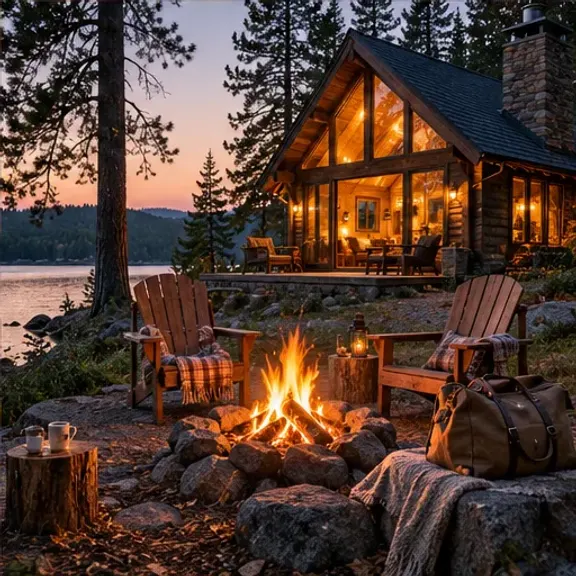
Illustrative artwork; not a photograph of a tested outing.
A cabin escape is appealing partly because the setting makes ordinary things feel different: breakfast at another window, a quiet evening with a game, a short walk from a new front door. Choose accommodation that suits how you actually relax, rather than a photograph that requires you to ignore practical needs.
Keep the weekend deliberately light. You can plan food, travel and one possible outing while leaving most of the time open. The cabin does not need to deliver total seclusion, perfect weather or a dramatic change of personality. A comfortable place to be together can be enough.
Your supply checklist
Tick off what you have gathered, or print a fresh checklist. Ticks are for this page only.
☐
A confirmed cabin booking and host contact details
☐
Travel, arrival and checkout instructions saved offline
☐
Simple meals matched to the actual kitchen facilities
☐
Suitable clothes, personal essentials and usual medicines
☐
A small game, book or downloaded entertainment you both enjoy
Make it happen
1. Choose the comfort you will actually use
Discuss location, travel tolerance, sleeping arrangements, access and the facilities that matter to each of you. Check the listing’s current details and ask the host about unclear points, including heating, kitchen equipment, phone signal and any steps. Read the whole price and cancellation policy. A less dramatic cabin with the right practical setup can make a far more restful escape.
2. Plan arrival and two easy meals
Check directions, access roads, parking or public transport and how you receive the keys. Save information so you are not relying on signal at the final turn. Plan a simple first supper and breakfast suited to the kitchen, transporting chilled food appropriately. Bring only useful supplies, checking what the host provides rather than packing a second household out of uncertainty.
3. Arrive before switching fully into holiday mode
Check the cabin, locate exits and read the host’s instructions for heating, appliances and any other facilities. Report problems through the proper contact rather than improvising repairs. Unpack essentials and put food away safely. Agree a light plan for the stay, including one optional local walk, a meal and enough time when nobody has to be anywhere.
4. Let the setting do some of the work
Enjoy a suitable local route after checking weather, access and daylight, or stay in if that feels better. Cook something manageable, sit down together and choose a game, book or shared conversation. Keep devices at a level you both welcome rather than imposing a surprise digital ban. You can appreciate the view without scheduling every hour around extracting maximum holiday value.
5. Leave the cabin with a small thing to bring home
Follow checkout instructions, store or transport remaining food safely and check drawers, sockets and outdoor areas for belongings. Leave enough time for the return journey without rushing. Each choose a detail you would enjoy recreating at home, such as a slower breakfast or an evening game. Save practical accommodation notes privately if you might return, alongside a favourite memory of the stay.
Make it work for you
A more accessible escape
Ask specific questions about routes, steps, bed access, bathroom layout and parking. Confirm what you need in writing rather than relying only on a broad accessibility label.
A wet weekend
Bring a small indoor plan and suitable food so bad weather does not require extra driving. Take outdoor breaks only when conditions and local routes are suitable.
A cabin feeling at home
Clear an evening and morning, prepare easy meals and make a cosy reading or games corner. Borrow the slower rhythm while keeping the accommodation cost out of the plan.
Before you begin
Check the full booking terms and facilities. Follow host and appliance instructions, locate safety information on arrival and do not improvise heating or repairs. Plan food storage, weather and safe travel.
The cabin escape essentials page
Complete this before booking, then keep a copy with the travel details.
1. Facilities and access needs confirmed with the host:
2. Full stay, travel and food total:
3. Cancellation, deposit, check-in and checkout terms:
4. Arrival directions, keys and host contact saved:
5. First supper and breakfast matched to the kitchen:
6. Optional walk and an indoor alternative:
7. Personal essentials and food transport checked:
8. One quiet habit we would like to bring home:
These prompts are included when you print the plan and checklist.
A good escape can send you home with a little more room for each other.
How did your date go?
Was a step unclear, or did you find a useful shortcut? Tell us the activity and what you would change.
Email feedback about this plan →Your email app opens so you can choose what to send. Please leave out private details, children’s names and photographs of other people.
Make choosing the date part of the date
Put a few possibilities you both like into a board and enjoy finding out which one wins. The sample game is an easy place to start.
A few more possibilities
A glamping retreat with cosy layers and a properly checked booking →A sunset stroll with time to stop and actually enjoy it →A luxury hotel staycation, with no ambitious sightseeing requirement →Published by Daniel Jenkins · Guide text updated 28 October 2026
The activity lists were supplied and edited for Deal or Date. Guides and illustrative artwork use AI assistance. They are planning suggestions rather than accounts of personal trips or product tests. Venue prices, entry rules and accessibility need checking with the place you choose.
More dates. Brighter days.
No login. Just the two of you.
Deal or Date · Beta 0.1