A date night plan
Homemade pasta, with a floury table and a forgiving dinner plan
Make fresh pasta together using a trusted recipe, share the practical jobs and turn your first batch into an easy Italian-inspired supper.
Is this the plan for you?
Time to allow
Allow around 3 hours for preparation, the recipe’s resting stages, shaping, cooking and eating. Exact timings depend on your chosen dough and equipment.
Budget notes
Keep spending low with cupboard ingredients and a rolling-pin recipe. Check flour, eggs or alternatives, sauce and dietary requirements; a pasta machine is optional.
These are planning suggestions, not live prices or bookings. The shorter and longer versions give you room to adapt the activity to your day.
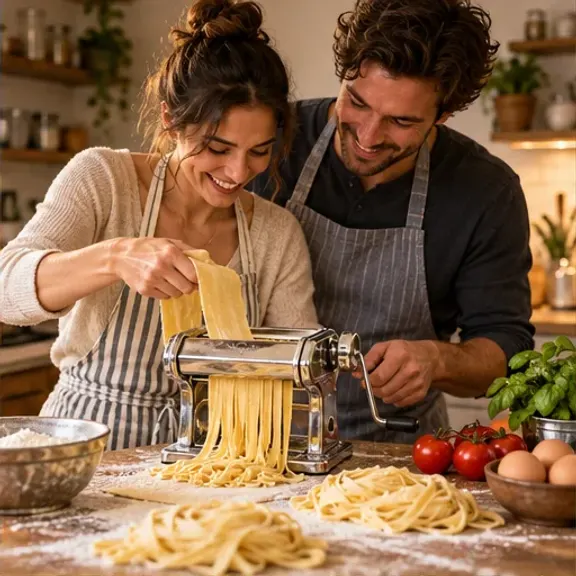
Illustrative artwork; not a photograph of a tested outing.
Fresh pasta is a lovely project for two pairs of hands. One person can roll while the other handles the sauce; both can admire the noodle that has become the length of a modest scarf. Choose a simple shape and let the recipe do the technical work.
This guide organises the date rather than replacing a tested recipe. Read one all the way through before shopping, checking ingredients, resting time and equipment. An easy sauce and a backup packet of dried pasta keep dinner relaxed if your first attempt becomes more educational than edible.
Your supply checklist
Tick off what you have gathered, or print a fresh checklist. Ticks are for this page only.
☐
A trusted pasta recipe and measured ingredients
☐
A rolling pin or pasta machine the recipe supports
☐
A clear worktop, bowl and suitable utensils
☐
A saucepan, colander and simple sauce ingredients
☐
Clean towels and suitable leftover containers
Make it happen
1. Choose one simple shape
Look for beginner instructions using equipment you already have. Read the dough, resting, rolling and cooking stages together, then check allergens and ingredient labels. Decide portions and choose a straightforward sauce. Flat ribbons may create fewer organisational debates than filled shapes, although you should follow your recipe rather than assume every dough behaves alike.
2. Prepare the kitchen first
Wash hands, clear the worktop and set out measured ingredients. Give one person the recipe-reading job while the other prepares utensils, then swap later. Keep ready-to-eat food separate from raw ingredients and clean as you go. Raw flour and dough need thorough cooking; tasting the mixture is outside this particular quality-control department’s remit.
3. Make and rest the dough
Follow the recipe’s mixing and kneading guidance, taking turns if comfortable. Use its instructions to judge texture and resting time rather than adding large quantities of flour on instinct. While the dough rests, make the sauce and lay the table. Sit down briefly and admire your developing restaurant management skills before the rolling stage begins.
4. Roll a manageable batch
Divide and roll as your recipe directs, keeping unused portions covered if instructed. Share the jobs so one person is not permanently feeding a machine while the other offers commentary. Work carefully with blades and moving parts. Set shaped pasta out as recommended and accept different widths; you are making dinner, not identical charging cables.
5. Cook and remember what worked
Cook thoroughly using the recipe’s guidance, handling boiling water and draining carefully. Combine with sauce and sit down while it is ready. Write one adjustment for next time, then follow appropriate storage advice for leftovers. Share the clearing. If backup pasta appears, serve it without presenting the evening as a failed examination.
Make it work for you
No pasta machine
Choose a recipe designed for hand rolling. Make a smaller batch and simpler shape before buying equipment for a process you may or may not enjoy.
Different dietary needs
Find a tested recipe that suits your ingredients, including egg-free or gluten-free requirements. Substitutions change dough behaviour, so avoid guessing ratios.
Less energy or hand strength
Use suitable equipment as instructed or split active work into short turns. Making sauce together for bought fresh pasta is a relaxed alternative.
Before you begin
Check allergens and avoid eating raw flour or dough. Clean hands, surfaces and utensils after raw ingredients. Take care with cutters, machines and boiling water, and follow current storage guidance.
Government guidance on handling flour safely →Your first-batch kitchen notes
Fill these in before cooking and add the last two lines after dinner.
1. Recipe, portions and ingredient checks:
2. Chosen shape and rolling equipment:
3. Resting time and what we will do meanwhile:
4. Who starts on dough, and when we swap:
5. Sauce and when it needs to be ready:
6. One thing the recipe helped us get right:
7. One change for next time:
These prompts are included when you print the plan and checklist.
An uneven ribbon of pasta still has every right to feel pleased with itself.
How did your date go?
Was a step unclear, or did you find a useful shortcut? Tell us the activity and what you would change.
Email feedback about this plan →Your email app opens so you can choose what to send. Please leave out private details, children’s names and photographs of other people.
Make choosing the date part of the date
Put a few possibilities you both like into a board and enjoy finding out which one wins. The sample game is an easy place to start.
A few more possibilities
Bake and decorate a cake with room for a wonky masterpiece →A cocktail-making night with a very welcome mocktail menu →A cooking class where the main ingredient is learning together →Published by Daniel Jenkins · Guide text updated 28 October 2026
The activity lists were supplied and edited for Deal or Date. Guides and illustrative artwork use AI assistance. They are planning suggestions rather than accounts of personal trips or product tests. Venue prices, entry rules and accessibility need checking with the place you choose.
More dates. Brighter days.
No login. Just the two of you.
Deal or Date · Beta 0.1