A date night plan
A sandcastle competition with extremely ambitious planning permission
Build two little seaside kingdoms with a shared brief, a sensible building patch and judging categories that leave plenty of room for wonky turrets.
Is this the plan for you?
Time to allow
Allow about 90 minutes at the beach, including choosing a spot, building and clearing up. Check tides and leave enough time to return by your safe route.
Budget notes
Use buckets and tools you already own for no new spending. Include travel or parking in your plan, and skip buying a full beach kit for one afternoon.
These are planning suggestions, not live prices or bookings. The shorter and longer versions give you room to adapt the activity to your day.
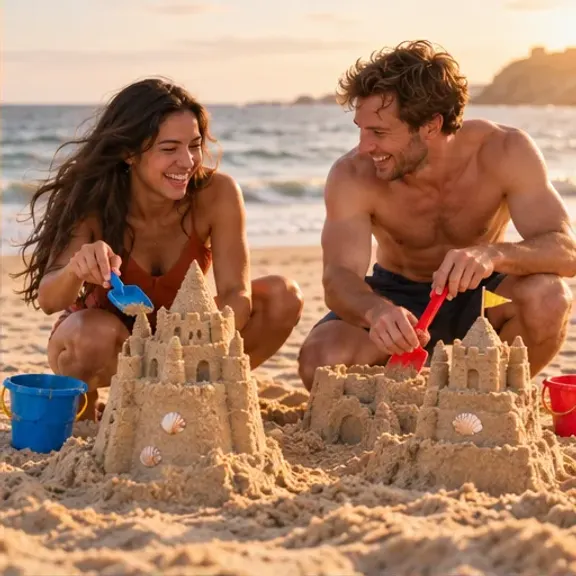
Illustrative artwork; not a photograph of a tested outing.
A bucket of sand is a surprisingly good invitation to get absorbed in something together. Give yourselves a small patch of suitable beach, decide what your castles are supposed to do and start building. One might become a seaside palace; the other may mainly demonstrate how gravity feels about an overconfident tower.
Keep the competition friendly by choosing several things to celebrate. A thoughtful doorway, an excellent name or an extravagant story can win a category without a single straight wall. You can work on separate castles or join forces halfway through if a shared kingdom sounds more appealing.
Your supply checklist
Tick off what you have gathered, or print a fresh checklist. Ticks are for this page only.
☐
A bucket or reusable sand mould each
☐
Small spades or suitable sand tools
☐
Water, layers and sun protection as needed
☐
A bag for belongings and all rubbish
☐
A pencil and the castle judging sheet
Make it happen
1. Choose the building site before the design
Check weather, tide times and local beach rules, then choose a suitable place with a straightforward exit. Keep clear of water, cliffs, access routes and anyone else’s space. Avoid digging deep holes or tunnels. Set your things above the working patch so you can leave promptly if conditions change or the tide begins affecting your route.
2. Issue one very important royal brief
Agree a theme such as a holiday home for a dragon or a castle with the world’s best snack room. Set a rough building time and a modest footprint. Choose three judging categories before starting, including at least one that rewards imagination. Share tools fairly and decide whether giving each other practical help is part of the game.
3. Build a shape that can survive introductions
Start with a small mound or a few bucket shapes, testing the sand before adding delicate details. Use sand already within your suitable patch rather than fetching water from an unsafe place. Give each other room to work and compare progress occasionally. If the first tower falls, reshape it into a courtyard and pretend the architect planned that.
4. Add a detail with a proper backstory
Create doors, paths, tiny rooms or patterns using your tools. Keep natural habitats undisturbed and avoid collecting living creatures or taking objects from protected areas. Give the castle a name and explain who lives there. You can add a short shared challenge, such as designing a connecting road, if both of you have finished the main structure.
5. Hold the world’s smallest castle tour
Take turns introducing your buildings and give kind awards in the categories you chose. Photograph the designs if wanted without stepping into water for a better angle. Before leaving, smooth out holes and anything that could trip someone, collect all tools and rubbish and check the route back. Keep the castles in the pictures rather than taking beach material home.
Make it work for you
A shared build
Design one castle with a wing each, then connect them. Decide together where shared rooms go so the joint project stays collaborative rather than becoming a boundary dispute.
Building from a seat
Choose accessible facilities and a position that works for you. Use a small, shallow tray of suitable sand at home if reaching the beach surface is impractical.
No tools
Make small hand-shaped structures and patterns rather than large towers. The name, story and finishing details can still carry the competition without a bucket.
Before you begin
Follow beach signs, collecting rules and RNLI advice. Check tides and keep your exit clear. Avoid deep holes, tunnels, unstable edges and entering the water to gather materials.
RNLI beach safety →The seaside planning committee sheet
Choose three awards and fill in your castle details before the final tour.
1. Shared design brief:
2. Castle names and imaginary residents:
3. Award: most imaginative room and why:
4. Award: most impressive recovery from a collapse:
5. Award: detail we would like in our real home:
6. One feature we built together:
7. Tools counted, holes smoothed and rubbish collected:
These prompts are included when you print the plan and checklist.
The tide may eventually claim the property. Your magnificently unnecessary throne room had its moment.
How did your date go?
Was a step unclear, or did you find a useful shortcut? Tell us the activity and what you would change.
Email feedback about this plan →Your email app opens so you can choose what to send. Please leave out private details, children’s names and photographs of other people.
Make choosing the date part of the date
Put a few possibilities you both like into a board and enjoy finding out which one wins. The sample game is an easy place to start.
A few more possibilities
Try a TikTok challenge and keep the outtakes for yourselves →A couples photo shoot without the awkward engagement-poster poses →A library treasure hunt for your favourite kind of plot twist →Published by Daniel Jenkins · Guide text updated 28 October 2026
The activity lists were supplied and edited for Deal or Date. Guides and illustrative artwork use AI assistance. They are planning suggestions rather than accounts of personal trips or product tests. Venue prices, entry rules and accessibility need checking with the place you choose.
More dates. Brighter days.
No login. Just the two of you.
Deal or Date · Beta 0.1